
The crankshaft pulley is an essential component of your vehicle's engine timing system. It enables the alternator to receive energy from the crankshaft and recharge the battery. Without the crankshaft pulley, a significant part of your car simply wouldn't function.
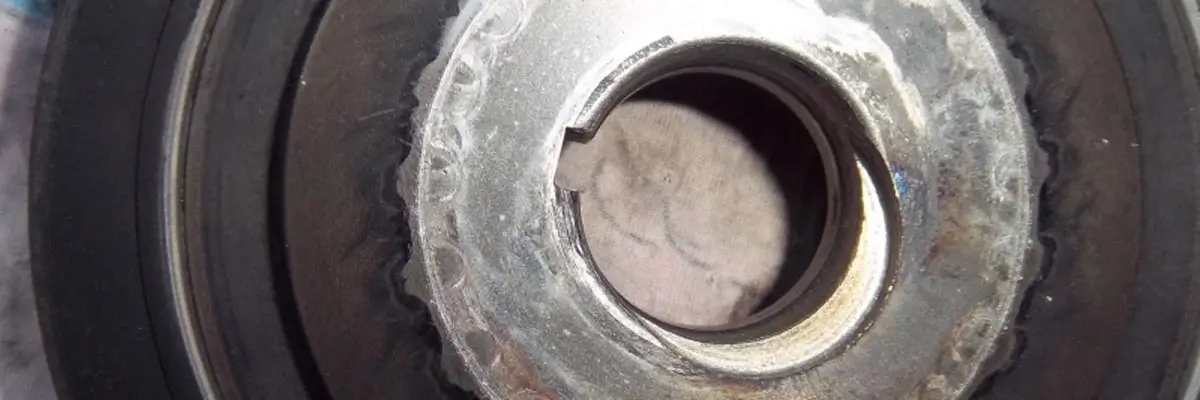
Function of a crankshaft pulley
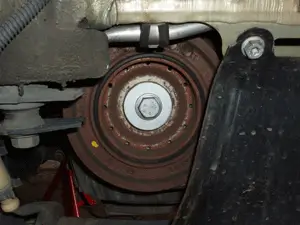
Let’s quickly review how the engine works. It consists of pistons and a crankshaft. The pistons drive the crankshaft, which in turn powers the wheels. The movement of the pistons also drives engine accessories, such as the battery or the alternator.
These components are connected to the crankshaft by a belt, known as the accessory belt.
The pistons and crankshaft rotate in jerks. A mechanical part is needed to regulate these jerks so that the belt and accessories rotate at the same pace. This is the role of the crankshaft pulley. Attached directly to the crankshaft, it drives the accessory belt.
Composition of the crankshaft pulley
The crankshaft pulley consists of:
- A hub: connected to the crankshaft, it can be made of cast iron or steel.
- The pulley groove: this receives the accessory belt. It is made of rubber and is circular in shape.
- A polymer plastic ring: it connects the two parts mentioned above.
How to test the pulley?
There is a simple trick to check your crankshaft pulley. To do this, mark two points on the metal parts of the pulley. Then start your engine, let it run for a few seconds, and turn it off. Examine your crankshaft pulley. If the two marks you made are no longer aligned, the part is worn out and needs replacing.
What happens if the crankshaft pulley fails?
How to detect a failure
Several symptoms can indicate a worn-out crankshaft pulley. You may feel vibrations inside the cabin or hear squealing noises when starting the engine, turning on the air conditioning, or using power steering. Several warning lights may illuminate if your crankshaft pulley is the issue:
- The battery warning light comes on
- The air conditioning warning light
- The engine warning light indicating engine overheating
You may also hear knocking noises from the engine, smell something burning, or even see smoke coming from the engine. Your crankshaft pulley might make a different noise than when it operates normally.
Causes of failure
One of the main causes of failure is wear and tear on the crankshaft pulley. Regular maintenance of the pulley is not necessary, but frequent checks are advisable. The damage can be significant, and repairs can be costly.
Consequences of a broken pulley
A broken crankshaft pulley can shatter. This shattering can send plastic debris into critical engine parts, such as the accessory belt or the timing belt. As a result, the accessory belt may overheat. In this case, the plastic debris can also damage the valves, preventing them from performing their intake and exhaust functions if they are too damaged. Finally, the pistons may also be affected by the failure of the crankshaft pulley.
How much does a crankshaft pulley cost?
The average cost of a crankshaft pulley, depending on the manufacturer, is around 100 euros, but this price may vary depending on the vehicle model.
You can opt for second-hand parts, but only if you know the exact reference of your crankshaft pulley.
Replacing the crankshaft pulley
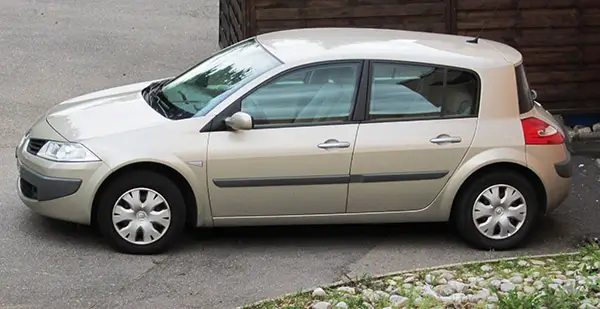
You will need two people to perform this operation. It is quite complex and requires some mechanical knowledge. The procedure we will present is applicable to the Renault Megane.
First, lift the front of the car and remove the front right wheel. Then remove the half-shell of the mudguard.
Next, loosen the lower fixing bolt of the tensioner pulley support, then loosen the upper fixing bolt and pull the tensioner pulley support upwards to loosen the belt.
Remove the belt from the power steering pump pulley, unscrew the four fixing bolts of the crankshaft pulley’s plastic cover, and remove it. The crankshaft pulley is now accessible.
Removing the crankshaft pulley
To remove the crankshaft pulley from its mount, first remove the accessory belt. Ask a second person to press the vehicle’s brakes. This step keeps the engine stationary. You can then remove the crankshaft pulley’s fixing bolt. Once this is done, you can remove the part!
Compare the two pulleys
On the removed crankshaft pulley, the rubber band designed to absorb engine vibrations has completely disappeared. Make sure the reference of the new pulley matches the old one before installing it.
Install the new pulley
To install the new crankshaft pulley, start by positioning the pulley, then its plastic cover, and finally its fixing bolts. Tighten the bolt to the specified torque while the second person presses the brakes to immobilise the engine.
Reassemble the components
To complete the operation, reinstall the accessory belt onto the crankshaft pulley and the power steering pump pulley. Insert a square-ended key into the tensioner pulley support, then pull the tensioner pulley downwards to tighten the belt. Tighten the upper and lower fixing bolts, then start the engine to check that the pulley rotates correctly and that the belt is in place. Finally, reinstall the crankshaft pulley cover, the front half-shell of the mudguard, and the tyres!
What are the other components of the timing system?
Share this article