
The intake manifold is essential for the proper functioning of the engine pistons. In this article, we will see how the intake manifold works and its symptoms when clogged.
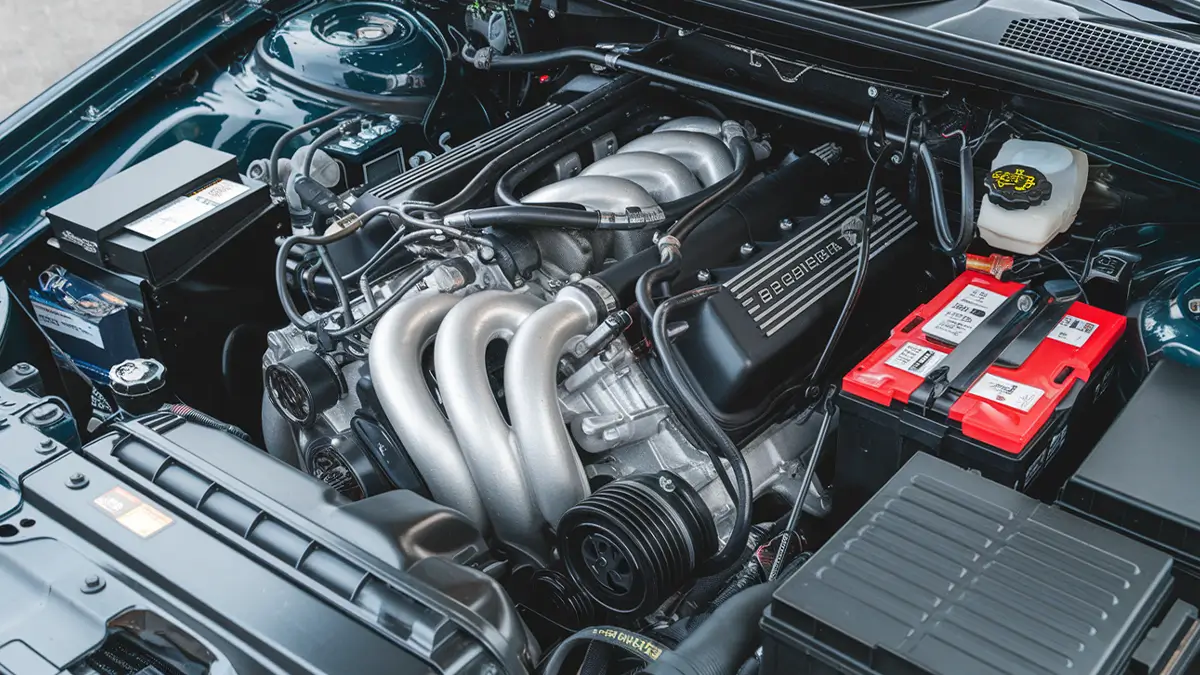
The principle of air intake
The air intake is the principle that allows air to enter the engine. Without air, the engine cannot start, and the pistons cannot function.
To reach the engine, air follows a specific path:
- First, it passes through the air filter, which aims to trap as many particles as possible to prevent engine damage
- Then it goes through the flow meter, a sensor that informs the engine control unit about the amount of air entering the engine
- After that, the air reaches the turbocharger and the intercooler, if the engine has one
- For petrol cars without a carburettor, the air passes through the throttle body, which regulates the airflow
- Finally, the air reaches the intake manifold
The intake manifold: functions
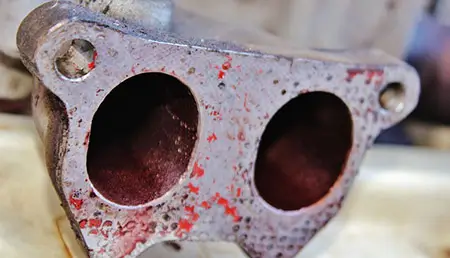
The function of the intake manifold changes depending on whether it is a direct injection car or an indirect injection vehicle.
For direct injection vehicles, the manifold only distributes the airflow into the combustion chambers, whereas for indirect injection engines, the intake manifold distributes both air and fuel into these chambers.
Focus on the air filter
The intake line includes an air filter. Its role is to trap particles in the air that could harm the engine. It is one of the parts that need frequent replacement in a vehicle. There are several types of air filters:
- Wet air filters: These are still found under some car bonnets. They are made of foam and, as the name suggests, are slightly damp so that harmful particles adhere more easily to the material.
- Dry air filters: Made of paper or cotton, they are enclosed in a sealed box. These are the most common in vehicles.
- Oil bath filters: These are used by some vehicles with specific functions. They are often used in challenging terrains, such as sandy areas.
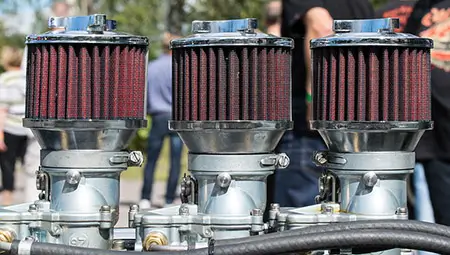
To maintain your dry car air filter, replace it every 20,000 km or clean it with a vacuum cleaner. For wet air filters, it is better to replace them every 50,000 km. Only the oil bath air filter does not need to be replaced. To maintain it, simply change the oil approximately every 20,000 km.
The exhaust manifold
The exhaust manifold's role is to collect the burnt gases exiting the valves and guide them to the air. It contains a number of pipes equivalent to the number of cylinders in your car's engine.
Intake manifold problems
Symptoms of failure
The failure may be due to a cracked or clogged intake pipe or worn-out flaps. In this case, the car's turbocharger will still reach its normal speed. However, increased fuel consumption may be observed.
Consequences
If the intake manifold is clogged, it will no longer perform its function effectively. The engine may lose power.
You may also notice increased fuel consumption and, consequently, higher gas emissions into the atmosphere. The EGR valve and intake valves may also be affected. In the case of a clogged intake pipe, black soot deposits may be found in the intake manifold.
Symptoms of a manifold leak
Problems can also arise from a leak in the intake manifold. Several symptoms can help you detect this type of failure. Initially, the engine may lose power due to poor distribution. You may also have difficulty accelerating or maintaining a constant speed.
You can detect an intake manifold leak through oil puddles that may form under your vehicle or louder noises coming from the engine.
Cleaning the intake manifold
Required tools
You will need the following to perform this operation:
- Gloves: the intake manifold can be very dirty
- A 5mm Allen key
- A high-pressure cleaner
- A stripping product
The process
To start, you need to completely disassemble the intake manifold after removing the EGR valve and the throttle body. To do this, remove the four screws located at the top and bottom of the intake manifold using your 5mm Allen key.
Note: A screw is sometimes hidden inside the intake manifold's entry. You will need to remove it to detach the part completely.
After removing the part, you can proceed with the cleaning. First, use a high-pressure cleaner. Once done, apply the stripping product and let it sit for a few minutes. Then rinse it with clear water and let it dry.
You can also use a vacuum cleaner in each opening to remove any remaining dust.
If the gasket of your intake manifold is too damaged, it is better to replace it. You will have no difficulty determining the correct orientation for the gasket, as it can only be installed in one direction.
Once the intake manifold is clean, you can reassemble it by following the steps described earlier in reverse order.
Other articles you may find interesting
Share this article