
The car is an important part of daily life, so it needs regular care. However, there are several types of diagnostic tools.
OBD2 diagnostic devices connect to the OBD port in your car to analyse its proper functioning.
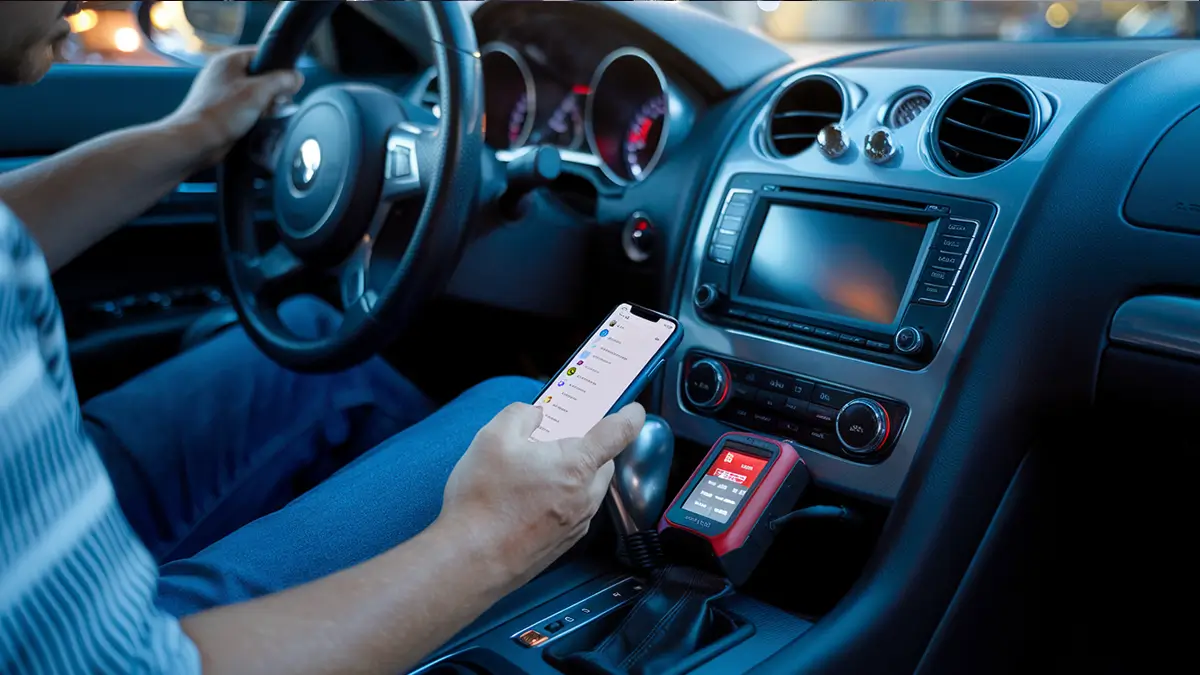
What is an OBD2 device?
The engine control unit (or ECU) gathers data from the various control units in the car. If a fault is detected, it sends an error code to alert you of a problem that needs fixing.
And this is where the OBD2 device comes into play!
It is an electronic diagnostic tool that detects and analyses fault codes in your vehicle. This allows you to identify the location and type of fault that needs repair.
OBD2 devices are therefore very practical diagnostic tools!

How to use an OBD2 device?
The device is a tool for transferring data from the ECU to the diagnostic software. However, the device alone will not allow you to perform the diagnosis of your car. For this, you will need to pair it with other automotive diagnostic tools.
The tools needed for diagnosis
OBD2 devices are very easy to use. However, using them alone would not be very useful… Indeed, these devices only transfer the information collected by the ECU.
Just like when you want to charge your phone, you need an electrical socket, but most importantly, your charger!
To perform the diagnosis of your car, you will need three things:
- The OBD2 device
- Diagnostic software
- A bit of elbow grease
Choose our diagnostic tools! They include everything you need to easily perform a complete diagnosis of your vehicle.
The steps to follow
After locating the OBD connector in your car, you will need to plug the device into it. Once the device is connected to the connector, you can launch your diagnostic software.
You will then be able to detect, read, and clear fault codes from your ECU. But make sure to repair the faults before clearing the codes! Otherwise, the fault codes will automatically reappear during the next diagnosis.
The different types of OBD2 devices
Whether you want a multi-brand or single-brand device, as a professional or an individual, or depending on your software and the type of connection possible with the device, there are a multitude of OBD2 devices available.
Bluetooth OBD2 devices
Some OBD2 devices allow diagnostics via a Bluetooth connection. Once connected to your diagnostic software, you can select the device corresponding to your OBD2 device, and that's it!

This feature is generally more used for mobile diagnostic applications.
These devices allow you to avoid connecting to Wi-Fi outdoors (which is not always convenient). Moreover, a Bluetooth connection prevents being encumbered or restricted by a connection cable.
USB OBD2 devices
By far the simplest solution, USB OBD2 devices are ideal if you cannot connect via Bluetooth or Wi-Fi.
In case of network issues, the USB device will not even notice the difference.
For a wired connection, nothing could be simpler! Just plug the USB cable into your OBD2 device. The simplest solution for an immediate connection!

In conclusion
The OBD2 device is therefore an essential tool for diagnosing your car. But don't forget to buy diagnostic software as well! Without it, you won't be able to read or clear fault codes.
To learn more
Share this article