
The starter is a device whose main function is to start the engine. Like the battery and alternator, without this accessory, your engine cannot start.
So, how does the starter work, and how can you diagnose its faults?
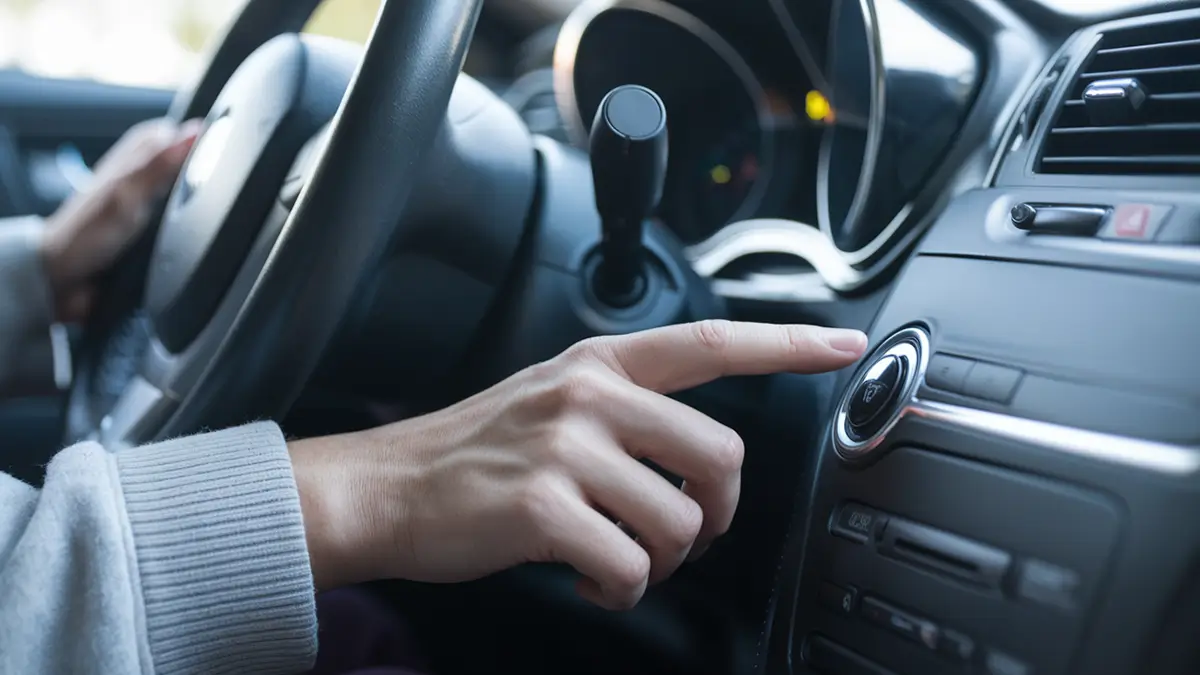
What is a starter?
It is an electrical component of your car that allows the engine to start. You use it every time you turn the ignition key. The starter is essentially a small electric motor powered by the battery to function. The battery provides the energy needed to start it.
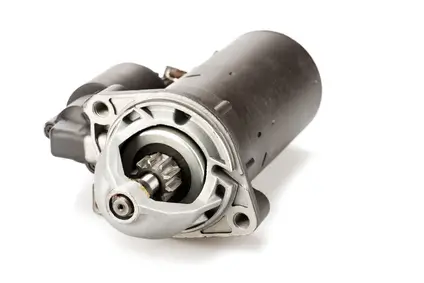
Components of this mechanical part
A car starter mainly consists of 4 elements:
- The direct current electric motor
- The solenoid
- The fork
- The engine drive pinion
How does the starter work?
Here are the different steps of the starter's operation:
- When you turn the key, a 12-volt pulse is sent to the starter.
- This voltage is sent to the solenoid, which is essentially an electromagnet, activating the fork.
- The fork pushes the drive pinion onto the flywheel's toothed wheel to engage with the engine.
- Once the pinion is in place, a contact inside the starter activates the electric motor, which turns the pinion and, in turn, the engine.
- When you release the ignition key, the starter stops, and the drive pinion returns to its position using a spring, disengaging from the engine.
Faulty starter diagnosis
Checks to perform
To determine if your starter is out of order, several checks need to be performed. First, check the condition of your battery. Indeed, the starter is powered by the battery. You can then proceed to diagnose the starter.
Symptoms and causes of failure
When you turn the ignition key, you hear the starter motor running, but the car does not start. There can be several causes for this issue:
- The fork that allows the pinion to reach the engine is broken. In this case, the solenoid can still retract, but it won't push the engine pinion forward.
- The electric motor includes a system that multiplies the engine's force. This gear system can break and fail to control the pinion.
If, when you turn the ignition key, there is no movement from the starter, the issue may be due to the following causes:
- The starter may be seized. To get it working again, you can try gently tapping the solenoid with a hammer using a block to avoid damage.
- The ignition switch (Neiman) may be faulty and no longer powers the starter.
- The electric motor or solenoid is out of order, requiring the starter to be replaced.
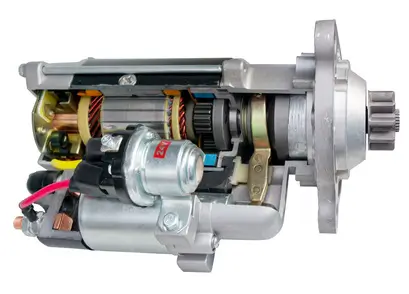
Testing the component
Before testing a starter, ensure the fault is not due to the battery or alternator.
To check the solenoid's power supply, you can connect a test lamp between the power supply wire and a ground (negative terminal of the battery or engine body). Then, turn the ignition key: if the lamp remains off, the starter is not the cause of the fault. If it lights up, the starter is indeed the problem.
To check the power supply, you have several options:
- You can check the connection of the positive cable from the battery to the solenoid.
- You can also check the ground line.
- You can measure the starter's voltage using a multimeter.
Diagnosis with the klavkarr multi-brand diagnostic tool
You can also check if your starter is the issue using our multi-brand diagnostic tool. If the problem originates from this car part, the result will display the following OBD fault codes:
- P0615: Starter relay - engine management circuit fault
- P0616: Starter relay - engine management circuit fault
- P0617: Starter relay - engine management circuit too high
Replacing a starter
It will need to be replaced if it cannot be repaired or if the engine does not start after performing the necessary actions.
To save costs, consider reconditioned parts, which are less expensive.
Disconnect the battery
To avoid any issues in case of mishandling, it is best to disconnect the battery. Always start by removing the negative terminal first.
Access the starter
First, determine whether you can access it from the top or bottom of the car. Then locate the connections and cable positions.
Next, disconnect the power cables. The starter may be attached either to the gearbox with two or three screws or at the front on the gearbox and the rear on the engine.
Proceed with the replacement
Ensure the mounting points of the old and new starters are identical. You can then install it, ensuring it is properly seated in its guide.
Make sure to clean any oxidised terminals, then reconnect the power cables.
Other articles you may find interesting
Share this article