
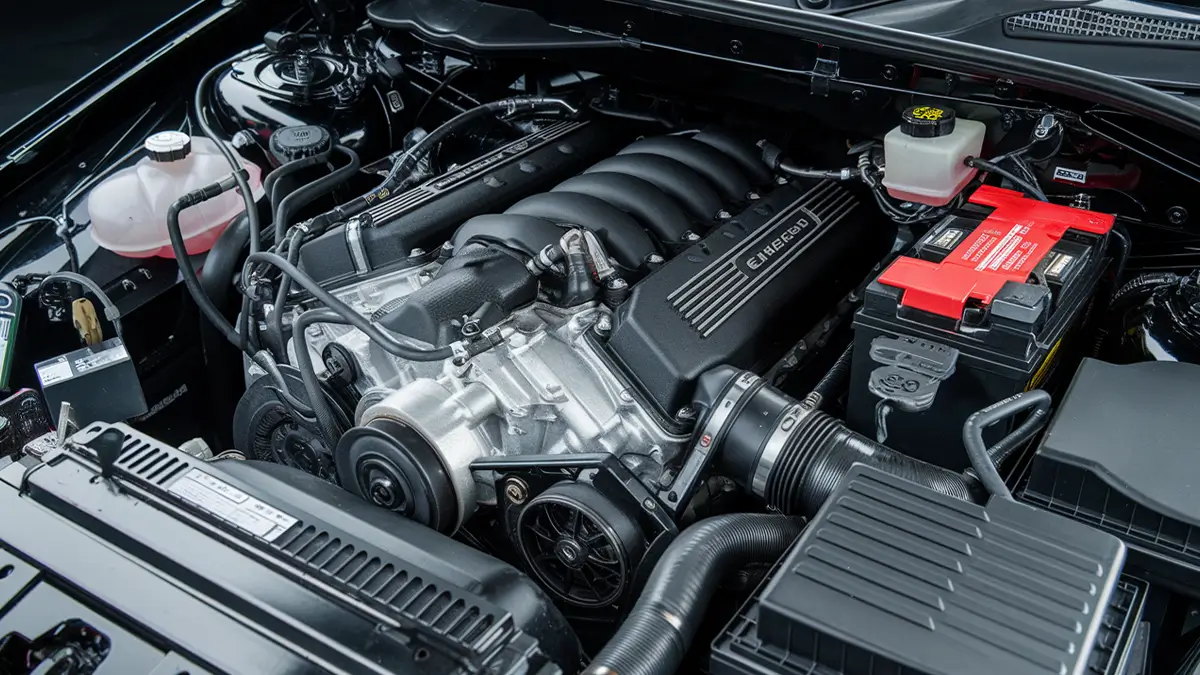
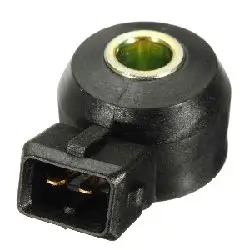
The knock sensor located on the engine block of your vehicle is responsible for detecting its vibrations and transmitting them to the engine control unit. The knock sensor, or "knock sensor" in English, plays a key role in the engine's injection system.
What is a knock sensor?
To begin with, it is important to understand what engine knocking is and how it occurs. Knocking is caused by uncontrolled combustion (auto-ignition) in the engine's combustion chamber.
This type of issue only occurs in petrol engines, which operate with controlled ignition (spark plugs), unlike diesel engines that inherently function with auto-ignition.
The engine control unit, in its ignition angle optimisation strategy, aims to find the most optimal angle to achieve the best combustion of the air/fuel mixture. However, depending on the engine's operating conditions (load/speed/temperature), the mixture may self-ignite, causing the knocking phenomenon.
The knock sensor informs the control unit to increase ignition delay to eliminate knocking, which could damage the cylinders.
The role of the knock sensor is therefore to transmit information about vibrations detected on the engine block to the engine control unit. It is directly mounted on your car's engine block.
How does the knock sensor work?
The knock sensor is located on the external surface of the engine block. It listens to the vibrations of the engine block and converts them into electrical signals. This sensor is generally piezoelectric, meaning the engine vibrations are transformed into an electrical signal that the ECU receives and decodes to determine if knocking is present.
When knocking occurs in the combustion chamber, the cylinder ignition signal enters "delay mode": this means the ignition command is postponed until the knocking disappears.
Maintenance of the sensor
This sensor requires no maintenance; however, ensure it is securely attached to the engine block. The sensor's tightening on the engine block must comply with the manufacturer's recommended torque.
Make sure to respect the tightening torque by using a torque wrench when reinstalling the knock sensor.
Detecting a knock sensor issue
Symptoms of failure
If your knock sensor fails, your engine warning light (MIL) will illuminate. This light indicates a problem with your engine. Note that a lit engine warning light on your dashboard is grounds for a re-inspection during the technical inspection.
Several OBD fault codes related to the knock sensor may also appear during an automotive diagnostic test. These include codes P0324 to P0334.
The most common fault codes are P0327 and P0328, which generally correspond to a short circuit or open circuit in the knock sensor signals transmitted to the control unit.
The engine may experience a loss of power, triggering the engine's limp mode. Fuel consumption may also increase.
Causes of failure
There can be multiple causes. Knock sensor failures can result from internal breaks or cracks in the sensor caused by mechanical stress.
The failure may occur if the sensor is improperly secured to the engine block. The sensor's wiring may also simply be cut or short-circuited.
Consequences of failure
A knock sensor failure will cause a delay in the ignition timing. Ignition is what ignites the air-fuel mixture in the combustion chamber. This delay will lead to increased fuel consumption in your car.
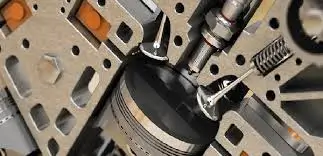
If the knock sensor is not repaired, the engine control unit will no longer receive data about knocking, which could seriously damage your pistons.
Testing the knock sensor
Testing the knock sensor is possible but complex. Its piezoelectric technology means this sensor is considered "active." You can start by using a multimeter to check signal continuity to rule out any open circuit issues that may arise from sensor damage or wiring/connectivity problems.
If the value returned by the multimeter is close to 1 Ohm, the sensor is functioning correctly. For a more in-depth diagnosis of this sensor, an oscilloscope will be required.
How much does a sensor cost?
The price of a knock sensor varies depending on the make and model of your vehicle. The price range is quite broad; expect to pay between 30 and a hundred euros. Since this part is not a wear-and-tear item, you may also consider purchasing a used one to save costs.
Replacing a knock sensor
If your knock sensor is indeed damaged, you can replace it yourself. You will only need a torque wrench and a socket of the correct size to perform this task.
Since the part is difficult to access, it may sometimes be necessary to remove various engine accessories in the vicinity (air filters, air ducts, battery).
Removing the knock sensor
- Locate the knock sensor's position on the engine block. Use a technical manual (RTA) if necessary.
- Follow the knock sensor's electrical cable to its connector and unplug it.
- Then gently pull the knock sensor out of its mounting post.
Proceed with replacement
Compare the old and new parts. This will ensure that both parts are identical and have the same characteristics. It is easy to make a mistake when purchasing.
To replace the knock sensor, install the new sensor in its position on the engine block. You will now need your torque wrench to tighten the sensor's bolt to the correct torque (usually 20Nm). Once this is done, reconnect the sensor's connector.
Finally, start your car and first check if the MIL engine warning light turns off.
You can turn off your engine warning light with our diagnostic tool. However, if the light does not turn off, it means the fault has not been properly resolved.
Other articles you may find interesting
Share this article