
To function properly, the engine needs to be cooled — this is the role of the cooling system, which is made up of several components working together to achieve this.
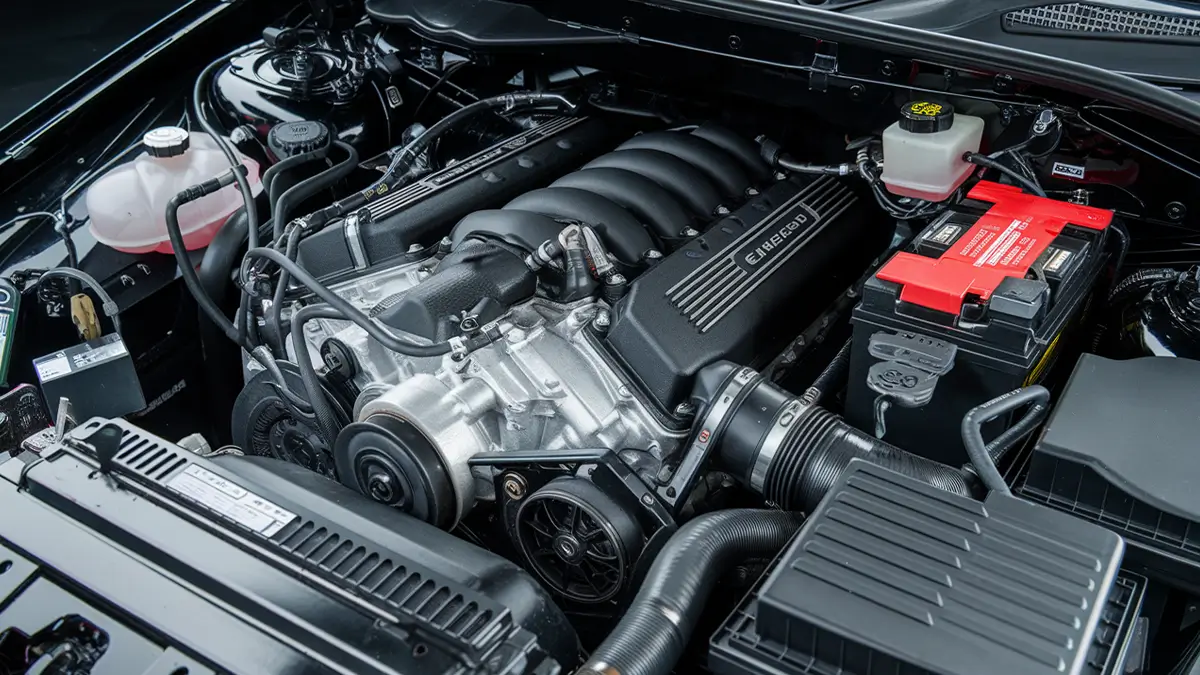
The cooling system is a fairly complex mechanism, but it's essential to the proper operation of the engine. Without it, the risk of overheating can lead to irreversible damage and may trigger the coolant warning light.
At startup, the engine must reach operating temperature quickly to perform efficiently and avoid excessive fuel consumption.
However, mechanical parts cannot withstand extreme heat (up to 800°C). Cylinder combustion also generates heat that must be dissipated. That's why cooling the engine is crucial to avoid serious damage.
Modern vehicles use a liquid-based cooling system that transfers heat to the radiator, where it is released into the air. There are also air-cooling systems, which are simpler but far less effective.
How the cooling system works
When the engine starts, the system initially operates in a closed loop to allow the engine to warm up quickly. This is shown in red on the diagram.
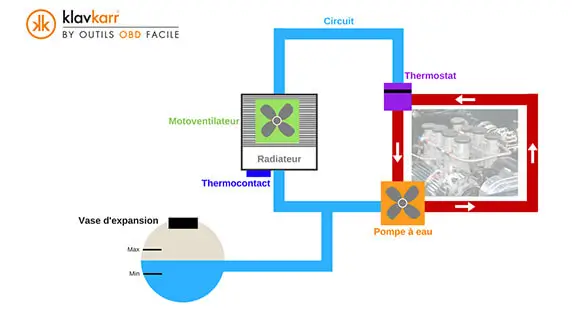
Once the engine reaches temperature, the thermostat opens to allow coolant to circulate through the larger loop (shown in blue), preventing overheating. The ideal temperature is 88°C.
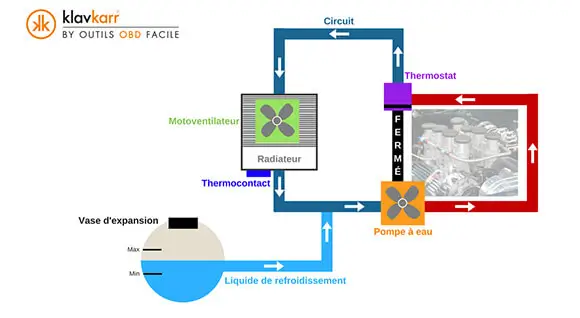
Let’s now look at the function of each component in the cooling system.
Coolant
While not a mechanical part, coolant is the core of the system. It serves two key functions:
- Transfers heat to the radiator for dissipation
- Cools the engine
To perform these tasks efficiently, coolant contains antifreeze properties, which prevent it from freezing below -20°C. That’s why water shouldn’t be used, as it freezes at 0°C. Frozen coolant can expand, damaging hoses, and preventing the water pump from working.
The hoses are pipes that carry the coolant through the system. They are usually made of rubber or metal.
Coolant temperature sensor
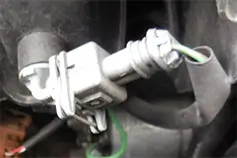
To cool the engine properly, coolant must be at the right temperature based on ambient conditions and engine load. The temperature sensor measures coolant temperature so the ECU can make necessary adjustments.
Water pump
The water pump has a simple role: to circulate coolant through the cooling system. It's driven by the engine and uses an impeller to maintain flow.
Thermostat
The thermostat controls access to the full cooling loop (shown in blue in the diagram).
It’s a thermal valve that opens and closes based on coolant temperature using a wax-based system that expands with heat.
Radiator
The radiator, located at the front of the vehicle, serves two purposes:
- Releases heat into the surrounding air
- Cools the coolant as needed using airflow (metal is great at retaining coolness)
Being at the front of the vehicle, the radiator is often damaged in accidents. If damaged, it must be replaced quickly to avoid disrupting the cooling system and causing engine overheating.
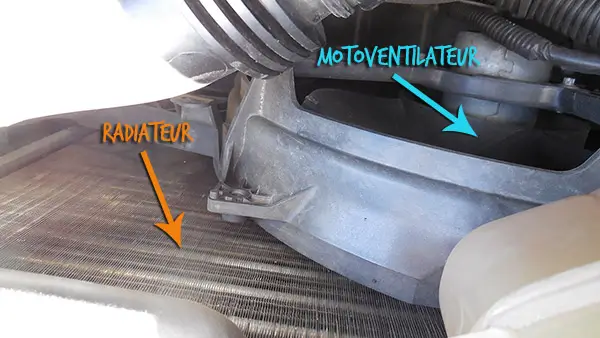
Fan switch and electric fan
When the radiator doesn’t receive enough airflow, a fan located in front of it kicks in to help. This is known as an electric cooling fan or fan assembly. It’s triggered by the fan switch (thermoswitch), a temperature sensor on the radiator. If coolant is too hot, the fan assembly activates.
This additional system is the final safety mechanism to prevent engine overheating and activation of the red warning light.
Expansion tank
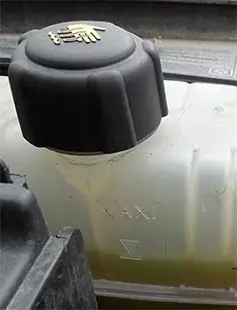
The expansion tank stores the coolant. It features a standard min/max marking to check fluid levels. Depending on temperature and flow, extra coolant may be added to the system.
That’s why you should check the level regularly — around every 20,000 km or at the same time as your engine oil change. Long drives and high temperatures can increase the risk of leaks or overheating.
Video recap
Here’s a quick, well-made video explaining the engine cooling system visually:
Cooling system failure: risks involved
If the cooling system fails, the first thing to do is identify the exact cause. We recommend running a diagnostic using an OBD2 tool, which can read fault codes from your vehicle's sensors.
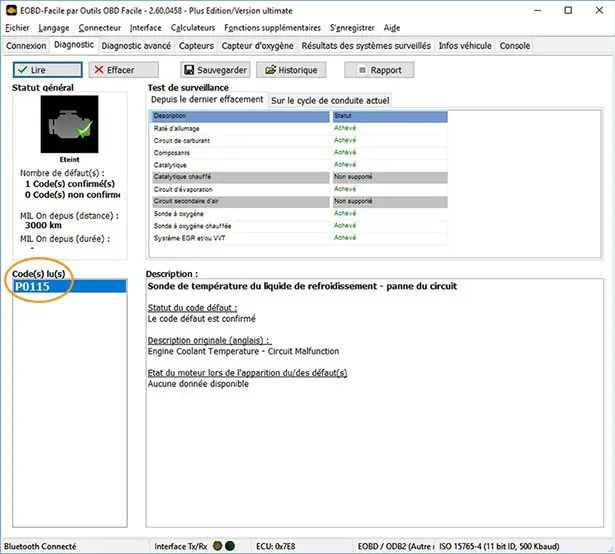
Note: a specific red warning light turns on when the engine is overheating. You must stop immediately to avoid severe engine damage.
A faulty cooling system can lead to serious overheating issues, which in turn may affect other mechanical components (like air-fuel mixture problems, high fuel consumption, etc.).
Learn more about the cooling system
You can also share this article with your friends on social media!
Share this article