
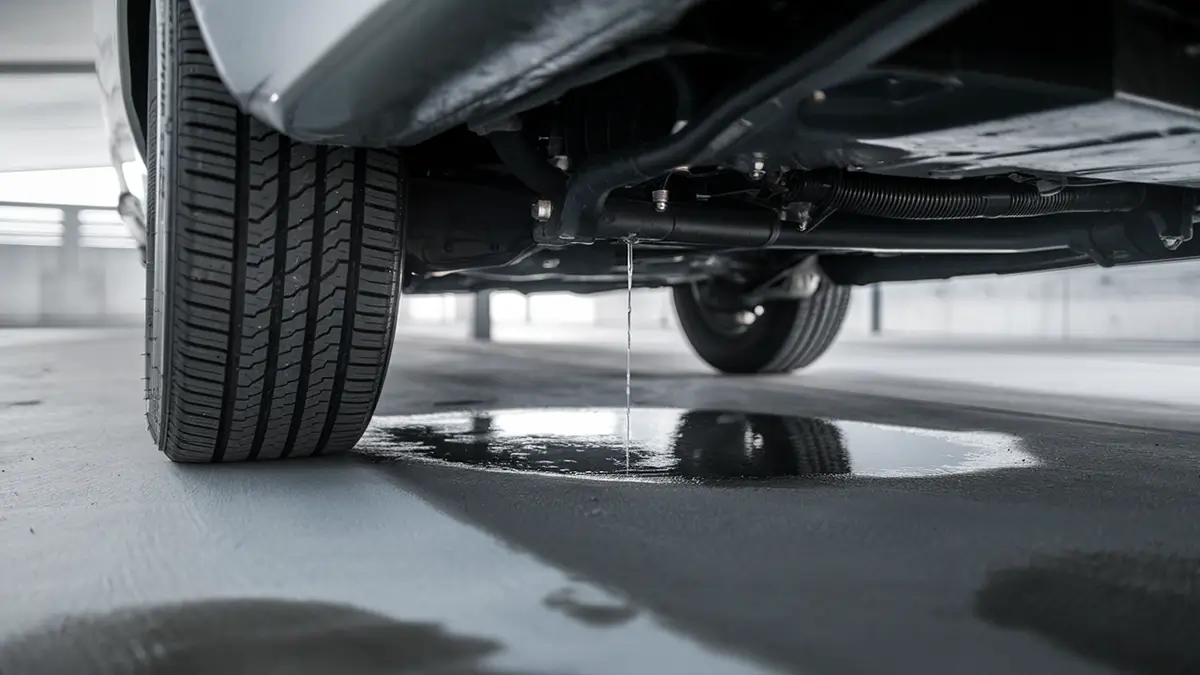
When the coolant warning light comes on, it often means there’s a leak. You need to act fast to avoid the risk of engine overheating.
Quick reminder!
The cooling system requires a specific fluid to cool the engine and dissipate heat. To manage this, a sensor monitors the coolant temperature and sends the data to the ECU. It also alerts the driver in case of overheating by activating a red warning light.
How to detect a coolant leak
Check the level in the expansion tank
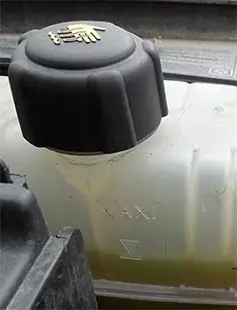
The first step to identify a leak is to check the coolant level in the expansion tank.
WARNING! Never open it when the engine is hot — risk of burns.
The level should be between the minimum and maximum marks. If you notice fluctuations, a sharp drop, or even bubbling, it’s not a good sign. That’s why it's important to check the expansion tank regularly. This is typically checked during an oil change.
You should also inspect the hoses and other cooling system components. White residue build-up? That’s a clear sign of a leak. White smoke coming from the exhaust could also indicate the same issue.
Red engine overheat warning light
If there isn’t enough coolant, the red engine temperature warning light may come on. It doesn’t always mean there’s a leak — the issue could also come from a faulty component like the radiator, water pump, or thermostat.
However, if all components seem to be working properly, coolant loss might be the cause. Again, regular level checks are essential.
If this warning light turns on, stop immediately. The engine is already overheating — continuing to drive could cause serious damage.
What causes a coolant leak?
Coolant leaks can come from several faulty parts in the system. Let’s go through them together.
Hoses
The coolant hoses can be cracked, loose, or even cut. This is the most common cause of a leak. To fix it, replace the damaged hose(s). This is a fairly simple task: just loosen the clamps, remove the old hose, fit the new one, and tighten everything back into place.
The radiator
The radiator can also be the source of the issue. Located at the front of the car, it’s exposed to debris. If the leak is minor, a sealant additive can help fix micro-cracks.
If the radiator is leaking from multiple spots and you're losing a lot of coolant, it's best to replace it. This may require removing the front bumper depending on the vehicle, so it's recommended to visit a professional garage.
The water pump
Less common but possible, the leak may come from the water pump seal. In this case, you’re out of luck, as replacing it usually means removing the timing belt, which is often connected to the pump.
The head gasket
Finally, if you see thick white smoke when starting the engine, it could be due to a blown head gasket, allowing coolant to enter the cylinders. Replacing the head gasket is a complex job that requires disassembling the top of the engine. It’s best left to a professional.
Draining the coolant
Once the leak is identified and before replacing any parts, you need to drain the coolant. This process is similar to an engine oil change.
- First, locate the drain plug on the lowest radiator hose and place a container underneath. Open the expansion tank cap to allow air in and speed up drainage.
- Once drained, replace the faulty parts and refill the cooling system with new coolant.
- Don’t forget to reconnect the hose at the bottom of the radiator.
- Pour the coolant into the expansion tank. It’s okay to fill a bit above the max line — the level will drop once the engine runs and the system is purged.
- And of course, put the cap back on!
Before refilling with coolant, we recommend flushing the entire system with water. Close the cap and let the engine run briefly to circulate the water. This helps remove sludge if the coolant hasn't been changed in a long time.
Never mix different types of coolant. Check the manufacturer’s recommendations and the color of your coolant — it gives clues about its properties.
Restarting and bleeding the system
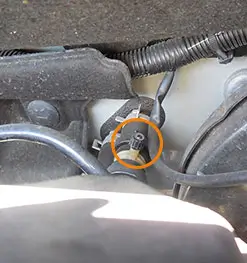
Now it’s time to bleed the cooling system. Simply start the engine and let it warm up so the new coolant circulates properly.
Next, loosen the bleed screw, usually located on a hose near the expansion tank. Use gloves or a cloth to avoid burns. This step releases air trapped in the system. The coolant level will likely drop again.
Once all the air is gone, tighten the screw and carefully open the expansion tank cap (again, using gloves or a cloth) to make sure everything is properly vented.
Turn off the engine and wait until it cools down before topping up if needed.
Learn more about the cooling system
Share this article