
A small orange engine-shaped warning light has appeared on the dashboard: this is the well-known check engine light. The priority is to understand what it means, what triggered it, and whether you can continue driving even if you don’t notice any issues.
What does the check engine light indicate?
What are the possible causes for it to appear?
What should you do if the check engine light is on but no issues are detected?
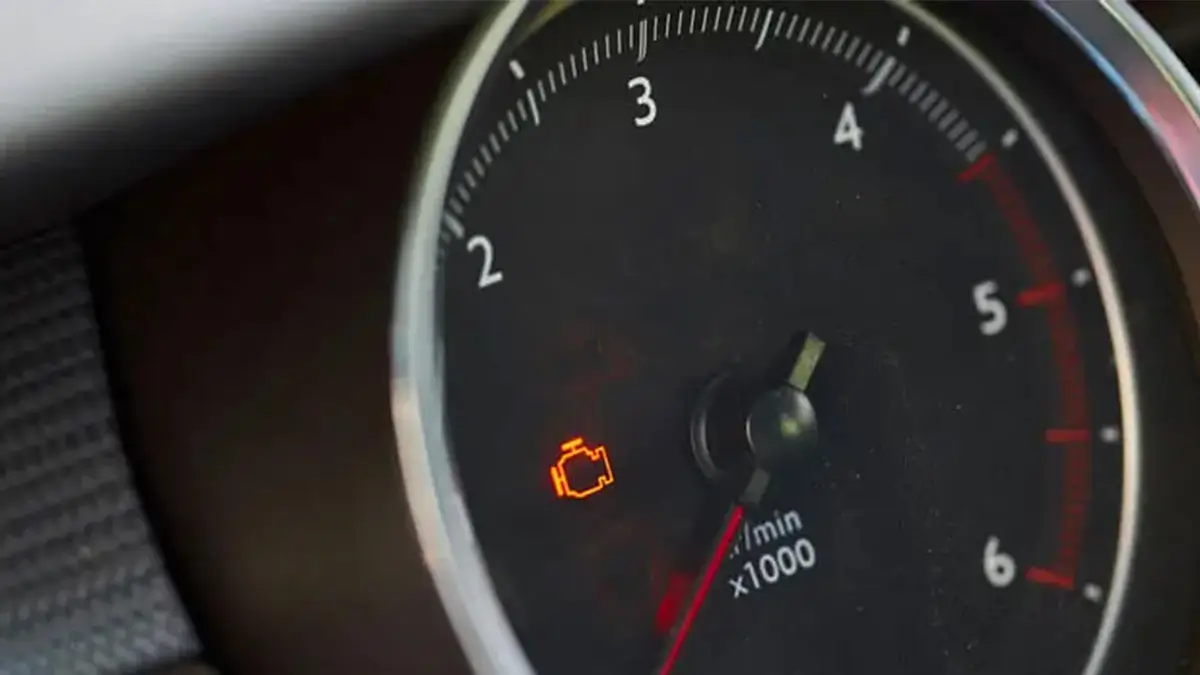
What exactly is the check engine light?
The check engine light turning on is never a good sign. It means that the onboard computer has detected an anomaly affecting the engine’s normal operation. This is a key warning indicator that should not be ignored when maintaining your vehicle.
How does the check engine light appear when it turns on?
The check engine light is one of the most recognized warning lights on a car’s dashboard, although it is not always correctly interpreted by drivers. It always signals an issue related to the engine.
The type and severity of these issues can vary, and they are often indicated by either a steady or flashing check engine light.
What does this light indicate?
The check engine light serves as a warning sign for potential problems with the emissions system, fuel injection system, or ignition system. This warning complies with European regulations on vehicle emissions and pollution control. In fact, there is a maximum pollution threshold that vehicles must not exceed. This check is carried out by the European On-Board Diagnostics system (EOBD), which has been mandatory in Europe since the Euro 3 standard and strengthened under the Euro 6 standard.
The different states of the check engine light
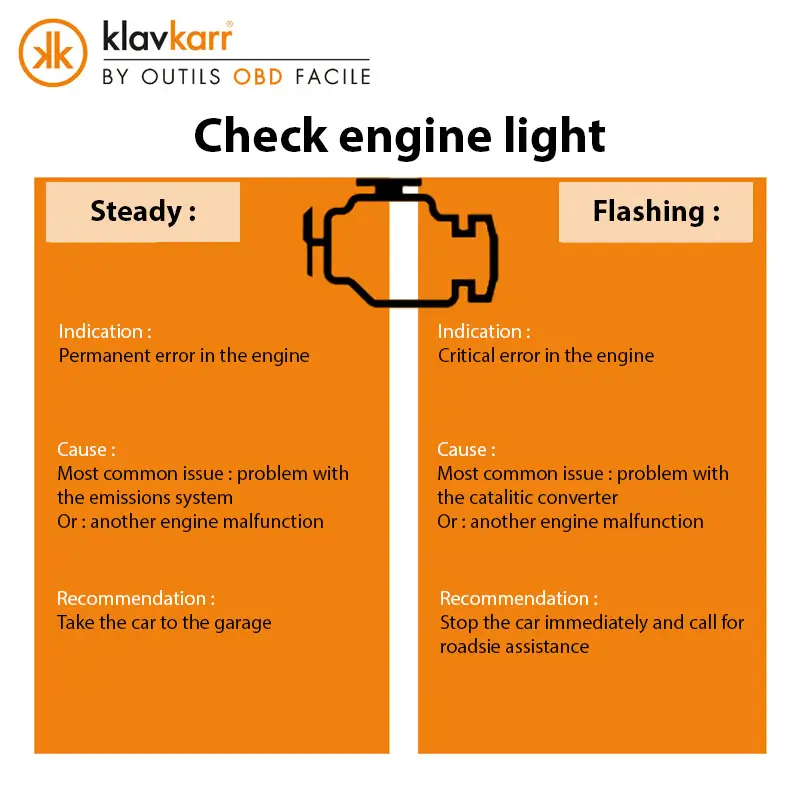
The check engine light can illuminate in two different ways:
- Steady light: A permanent fault has been detected. This is often an emissions-related fault. The car usually runs normally, with no immediate loss of power. The fault is often minor, but not always: only a diagnostic scan can confirm this.
- Flashing light: This suggests a critical issue with the catalytic converter, such as overheating or damage. In such cases, you must stop the vehicle immediately. Continuing to drive could cause permanent damage to the catalytic converter or even trigger a fire, putting the vehicle and other road users at risk.
Causes of the Check Engine Light Coming On Without Loss of Power
The most common cause is a fault in the emissions control system. The good news is that if the vehicle is running normally and the warning light remains steady, the issue is often minor. Here are the most common reasons why the check engine light may come on without any other symptoms:
- Loose fuel filler cap: this is very common shortly after refuelling. A worn seal or an incorrectly tightened cap can affect the fuel system pressure and trigger the warning light. Tighten it securely; the light may go out on its own after a few journeys.
- Faulty oxygen sensor: this oxygen sensor located upstream of the catalytic converter monitors the exhaust gases. If it becomes contaminated, it may trigger the warning light without necessarily causing a loss of power.
- Clogged DPF: on diesel vehicles, the diesel particulate filter can become blocked after frequent short journeys in urban areas.
- Clogged EGR valve (see our guide to cleaning the EGR valve) or a catalytic converter beginning to wear: these are common emissions control faults, particularly on diesel vehicles and vehicles mainly used for short journeys.
- Cold weather or moisture: condensation on certain sensors may cause the warning light to come on intermittently and then go out by itself.
- Ignition system: worn spark plugs or ignition coils starting to fail.
What should you do if the Check Engine Light is on but there are no apparent problems?
It depends on how the engine is behaving. If the amber Check Engine Light is on with no loss of power, the vehicle is driving normally and the light remains steady, the fault is generally not critical. You can carefully drive home or to a garage, but the vehicle should still be diagnosed as soon as possible.
However, if the engine no longer accelerates normally or produces unusual noises, smells or smoke: pull over in accordance with road safety rules and traffic regulations, switch off the engine and call a recovery service. You should do the same if the light is flashing. On a motorway, slow down, move onto the hard shoulder and stop in a safe location.
How far can you drive with an amber Check Engine Light on? There is no universally “safe” distance. As long as the light remains steady and there is no loss of power, you can drive to a garage. If it is flashing, stop the vehicle and do not continue driving.
What is limp mode? To protect the vehicle, the ECU may limit engine speed and performance when a serious fault is detected. Loss of power and limp mode are warning signs that should not be ignored.
Clear the check engine light after the repair
Once the faulty component is identified, the next step is to locate it in the engine. This can sometimes be challenging or inaccessible, in which case it is best to leave the repairs to a professional mechanic. When the fault has been fixed, you can clear the fault code with a Car Diagnostics Scanner to turn off the warning light.
Please note: disconnecting the battery is not enough. On recent vehicles, the code remains stored in non-volatile memory, and the warning light will come back on as long as the cause is still present. This also resets the OBD monitors, which can cause problems during the roadworthiness test.
Other situations where the check engine light may turn on
Share this article