
The catalytic converter plays a crucial role in reducing exhaust gas pollution (EURO1 standard). Therefore, it is important to ensure it is in good condition, as a clogged converter could damage your engine.
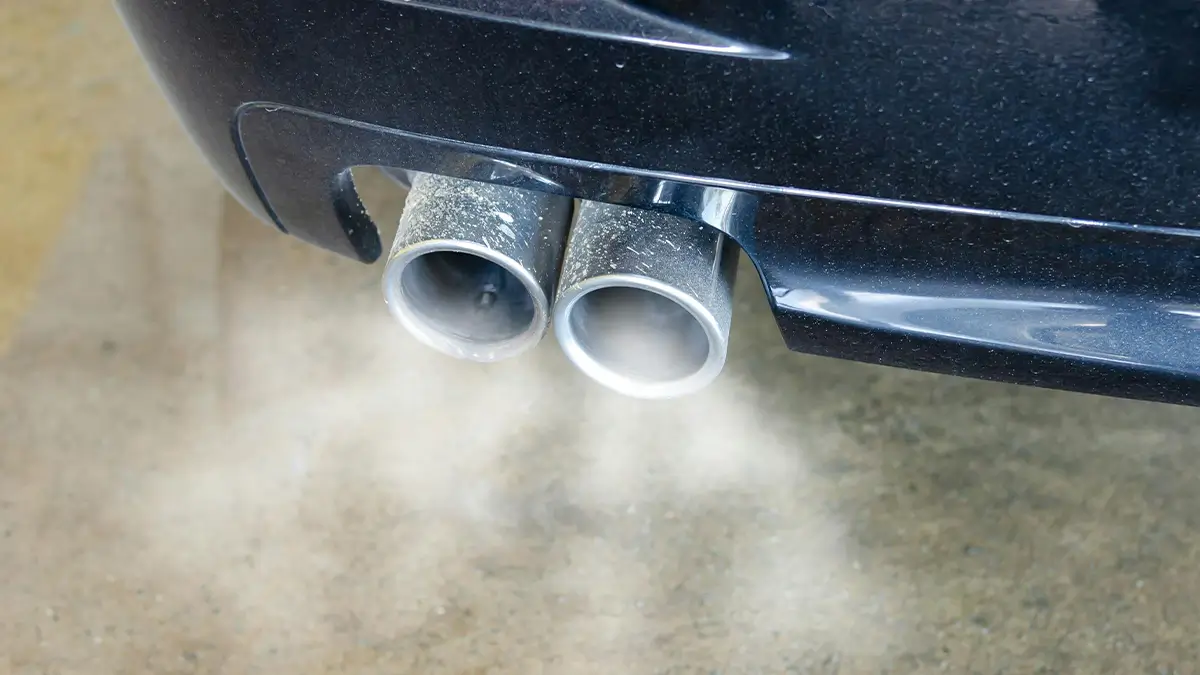
The catalytic converter, also known as a "catalytic pot," is an anti-pollution system designed to reduce the emission of pollutants during exhaust.
Since combustion is not optimal, toxic substances such as carbon monoxide (CO), unburned hydrocarbons (HC), or nitrogen oxides (NOX) are released from the engine. This is where the catalytic converter comes into play, eliminating these gases, which are harmful to health and the environment.
This system was developed in the 1970s by General Motors but was only adapted to vehicles starting in 1993, the year the first European environmental standard, EURO1, was implemented.
How the catalytic converter works
The catalytic converter has a ceramic structure containing microscopic particles of precious metals (alumina, cesium oxide, palladium, radium) that, when in contact with exhaust gases at very high temperatures (400°C), cause a catalysis phenomenon (chemical reaction) that eliminates harmful substances.
This structure is also referred to as a "honeycomb." Its large surface area allows it to eliminate nearly 90% of toxic gases.
The catalysis phenomenon: the importance of the lambda sensor
For this catalysis process to occur, a specific amount of oxygen and fuel is required for the transformation to be effective. This is referred to as the air-fuel ratio.
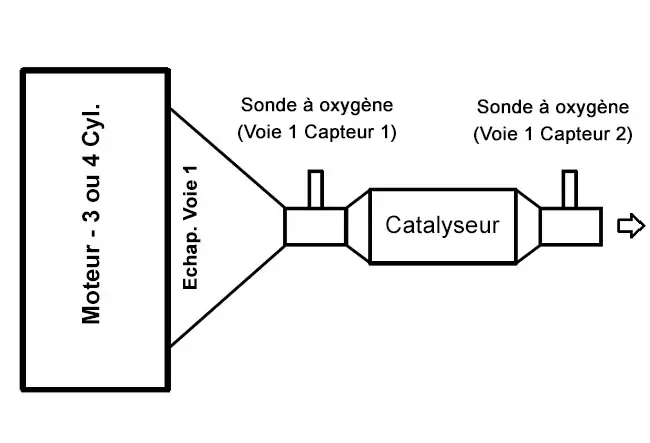
The ideal ratio is 14.7 grams of air for 1 gram of petrol, corresponding to a lambda (λ) value of 1. To maintain this value as closely as possible (between 0.97 and 1.03), the lambda sensor plays a vital role by continuously measuring the oxygen level and sending this data to the engine control unit, which then adjusts the fuel injection.
Two types of catalytic converters depending on the engine
Depending on the fuel used, there are two types of catalytic converters:
- The three-way catalytic converter for petrol engines, which simultaneously converts three gases (nitrogen oxides, carbon monoxide, and unburned hydrocarbons) into non-polluting substances (carbon dioxide and water).
- The two-way catalytic converter for diesel engines, which converts two gases (carbon monoxide and unburned hydrocarbons) into non-polluting substances.
To reduce pollutants in your diesel engine, you can also use AdBlue!
Note that since 2011 (EURO5 standard), a particulate filter is mandatory to complement this system in diesel engines.
Clogged catalytic converter
The catalytic converter may encounter problems or even become clogged. This is why, generally, the lifespan of a catalytic converter does not exceed 150,000 kilometres, depending on the overall maintenance of the vehicle and engine, as well as driving habits.
What are the consequences?
Firstly, to effectively convert toxic gases, the temperature must be around 400°C (catalysis phenomenon). This heat is difficult to achieve on short trips, so the catalytic converter may not have enough time to function and will become clogged, potentially causing blockage and triggering the engine warning light.
As with the DPF or EGR valve, occasional motorway driving is a viable solution.
A clogged catalytic converter can also result from a problem with the air-fuel mixture, potentially linked to the lambda sensor. These two components are closely related in their operation; if one is defective, the other may also malfunction.
Unburned gases due to misfires (spark plug failures), as well as oil, coolant, or excessive fuel, can also irreversibly contaminate the catalytic converter and destroy the layers of precious metals!
Be cautious of the ceramic structure, which can break and, in some cases, block gas evacuation.
Since the catalytic converter is located underneath the car, it may be damaged by debris hitting it.
If the catalytic converter is not functioning properly, you will pollute more and consume more fuel! With European environmental standards, this is a reason for a re-inspection during the MOT test!
How to detect a clogged catalytic converter?
Several signs may indicate a clogged or at least defective catalytic converter:
- Metallic noise or engine stalling due to the ceramic structure or precious metals
- If the catalytic converter is clogged, it allows little to no exhaust gas to pass through, potentially causing engine issues (difficult acceleration or recurring stalling)
- Opaque exhaust smoke
It is quite difficult to interpret these signs as issues with the exhaust system.
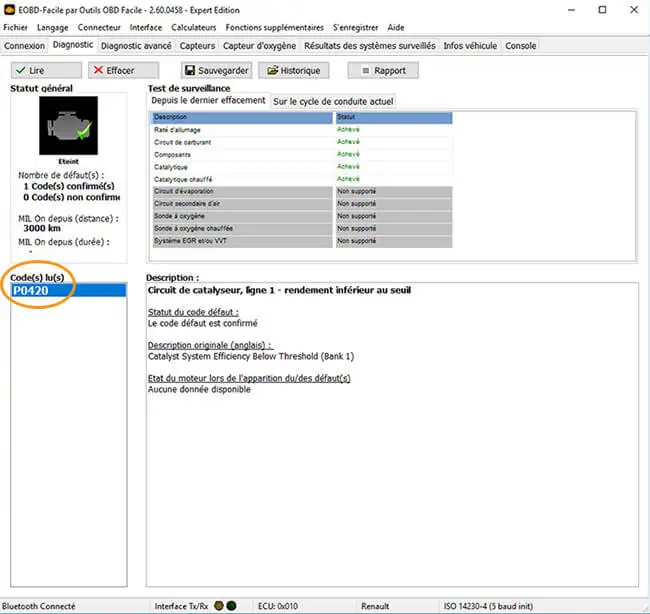
The simplest solution is to perform a car diagnostic with a scan tool. In the case of a clogged or defective catalytic converter, a fault code will be returned, as shown below.
Cost of a catalytic converter
Even with proper engine maintenance, there will come a time when you need to replace your catalytic converter. If it is in poor condition, do not delay, as it could damage the engine!
The cost of a petrol or diesel catalytic converter ranges from €300 to €1,000, depending on the vehicle's make and model. Labour typically takes between 1 and 2 hours.
Other articles you may find interesting
Share this article