
The EPC (Electronic Power Control) light is an orange indicator that appears on the dashboard of VAG group vehicles, including Volkswagen, Audi, Seat, and Skoda. This light generally signals an issue related to the electronic management system of the engine or acceleration.
When it lights up, it is essential to act quickly to avoid worsening the problem.
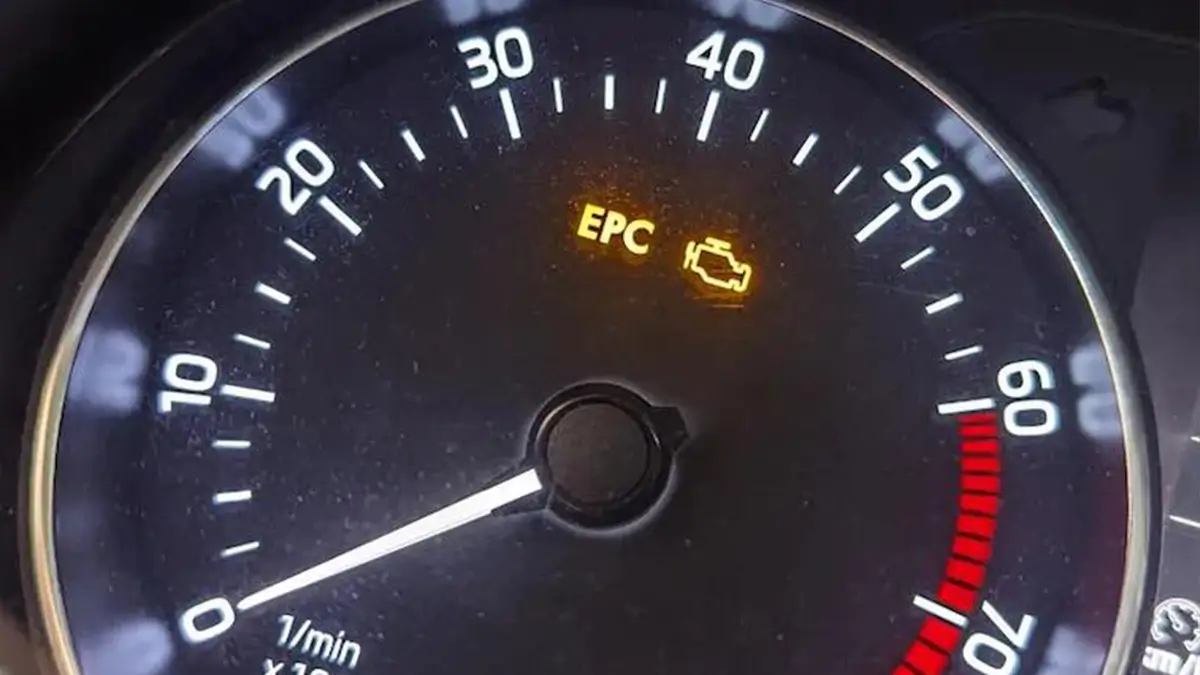
What does the EPC light mean on a Volkswagen?
Many wonder what the EPC warning light on VW means? It is specific to VAG group cars, including Volkswagen, Audi, Seat, and Skoda, and stands for Electronic Power Control. This system controls several essential functions such as throttle management, engine stability, and sometimes even ABS (anti-lock braking system) and ESP (anti-skid system).
When it lights up, it indicates a problem in one of the electronic systems managed by the EPC. It could be a minor fault or a more serious malfunction.
The EPC light does not illuminate for the same issues on a petrol engine as on a diesel engine.
EPC light without power loss
The EPC warning light can illuminate on a Volkswagen even without power loss. In this case, it is often a minor anomaly detected by the electronics, such as an accelerator pedal sensor, brake pedal sensor, or a simple loose connection. The vehicle can continue to drive normally, but the ECU still records a fault.
The absence of power loss does not mean there is no problem, but simply that the system has not activated a limp mode.
An OBD diagnostic is recommended to identify the exact cause of the alert and prevent a more serious failure from occurring later.
EPC light with power loss
When the EPC symbol lights up accompanied by power loss, it means the engine control unit has placed the car in limp mode to protect mechanical and electronic components.
This mode usually occurs due to a more significant malfunction, such as an issue with the throttle body, injection system, a critical sensor, or the ignition system.
The vehicle then becomes less responsive, with limited acceleration and reduced maximum speed, to prevent engine damage. It may also deactivate certain functions such as the anti-skid system (ESP). In this case, it is strongly advised to stop as soon as possible. These symptoms often indicate a serious problem requiring prompt intervention.
Common causes of the EPC light on Volkswagen
The most common reasons are as follows:
Faulty accelerator position sensor
This sensor sends essential information to the onboard computer to manage acceleration. If it is defective, it can send incorrect signals, triggering the EPC light and sometimes causing a loss of engine responsiveness.
Throttle body issues
The throttle body regulates the air intake into the engine. If it is dirty, stuck, or faulty, it can trigger the EPC light and affect engine performance.
Defective brake pedal sensor
This sensor is connected to the engine's electronic management system. If it malfunctions, it can send incorrect information and activate the EPC light, even without immediate power loss.
Problems with spark plugs or ignition coils
If the spark plugs or coils are worn or defective, they cause misfires. These malfunctions disrupt combustion and can activate the EPC light.
Faulty crankshaft sensor
This sensor continuously monitors the crankshaft's position to ensure engine synchronisation. A signal fault can cause starting difficulties, jerking, and the EPC light to illuminate.
The EPC light by brand: Volkswagen, Audi, Seat, and Skoda
Volkswagen
The EPC light on Volkswagen models, such as Golf, Polo, Passat, or Tiguan, is often related to engine management or acceleration issues. The most common faults include accelerator position sensors and throttle body failures.
Audi
On Audi models, like the A3, A4, Q5, or Q7, the EPC light is often associated with ignition problems or brake pedal sensor issues. These high-performance vehicles are very sensitive to electronic failures, explaining the frequency of EPC alerts.
Seat
Seat models, such as the Leon, Ibiza, or Ateca, may have their EPC light illuminate due to defective sensors or problems with the electronic acceleration management system.
Skoda
Skoda vehicles, like the Octavia, Fabia, or Kodiaq, share the same platform as Volkswagen and Seat, meaning the causes of the EPC light are similar. Brake sensor malfunctions or lambda sensor issues are often responsible for activating the light.
What fault codes are associated with the EPC light?
- P2120: Throttle/pedal position sensor/switch circuit,
- P2138: Voltage correlation between accelerator pedal position sensors/switches,
- P0335: Crankshaft position sensor,
- P0120: Throttle position sensor A/accelerator pedal position sensor A - circuit malfunction,
- P0200: Injector - circuit malfunction.
Note, this list is indicative and not exhaustive. Fault codes may vary depending on the engine, model, and year.
How to identify the cause of the EPC light?
Use an OBD2 diagnostic tool
VW cars are equipped with an OBD2 diagnostic port allowing you to connect a diagnostic tool. This is the most effective way to identify the cause of the EPC light. It allows you to read specific error codes and determine which component is faulty.
Visit a professional
If you are unable to identify or resolve the issue yourself, it is recommended to consult a mechanic or brand dealership.
How to turn off the EPC warning light ?
After performing the necessary repairs or resolving the issue causing the EPC light, it may be necessary to reset the pollution warning light to turn it off. Here's how:
Perform a diagnostic with an OBD tool
The safest method is to connect a diagnostic tool to your Volkswagen's OBD port. The diagnostic tool allows you to read the fault codes recorded by the ECU, then erase them once the issue is resolved, and finally, restart the vehicle to check if the light turns off.
Disconnect the battery (temporary solution)
If you do not have a diagnostic tool, you can disconnect the battery for about 10 to 15 minutes. This operation can reset the system and turn off the light. However, it is a temporary solution that does not necessarily address the root cause of the fault.
Wait for automatic reset
If the fault was minor or temporary, the light may turn off on its own after a few start-up cycles, once the ECU has confirmed the system is functioning correctly.
FAQ - EPC light on Volkswagen
What is the EPC light on a Volkswagen?
The EPC (Electronic Power Control) light signals an issue related to the electronic system of the engine or acceleration. It can be triggered by a faulty sensor, a dirty throttle body, or an ignition anomaly.
Why does the EPC light come on and the car lose power?
The EPC (Electronic Power Control) light signals an issue related to the electronic system of the engine or acceleration. It can be triggered by a faulty sensor, a dirty throttle body, or an ignition anomaly.
Is it dangerous to drive with the EPC light on?
Yes, because the EPC indicates an engine malfunction. Driving for a long time in this condition can damage essential components. It is recommended to quickly diagnose the fault with an OBD tool.
What should I do if the EPC light stays on at start-up?
If the EPC light illuminates at start-up and does not turn off, it could be a faulty accelerator or brake pedal sensor. An OBD diagnostic is necessary to identify the error code.
How to turn off the EPC light?
The light can only be permanently turned off after repairing the cause. With an OBD diagnostic tool, you can read and erase the fault code. If the problem persists, the light will reappear immediately.
Does the EPC light only appear on Volkswagen?
No, this light is present on all VAG group brands: Volkswagen, Audi, Seat, and Skoda. The causes are similar but may vary slightly depending on the model.
Learn more
Share this article