
The engine control unit is one of the central components of the vehicle. It manages the electronic information from the various sensors in your car. What should you do if the engine ECU fails? A diagnostic tool can help diagnose this ECU
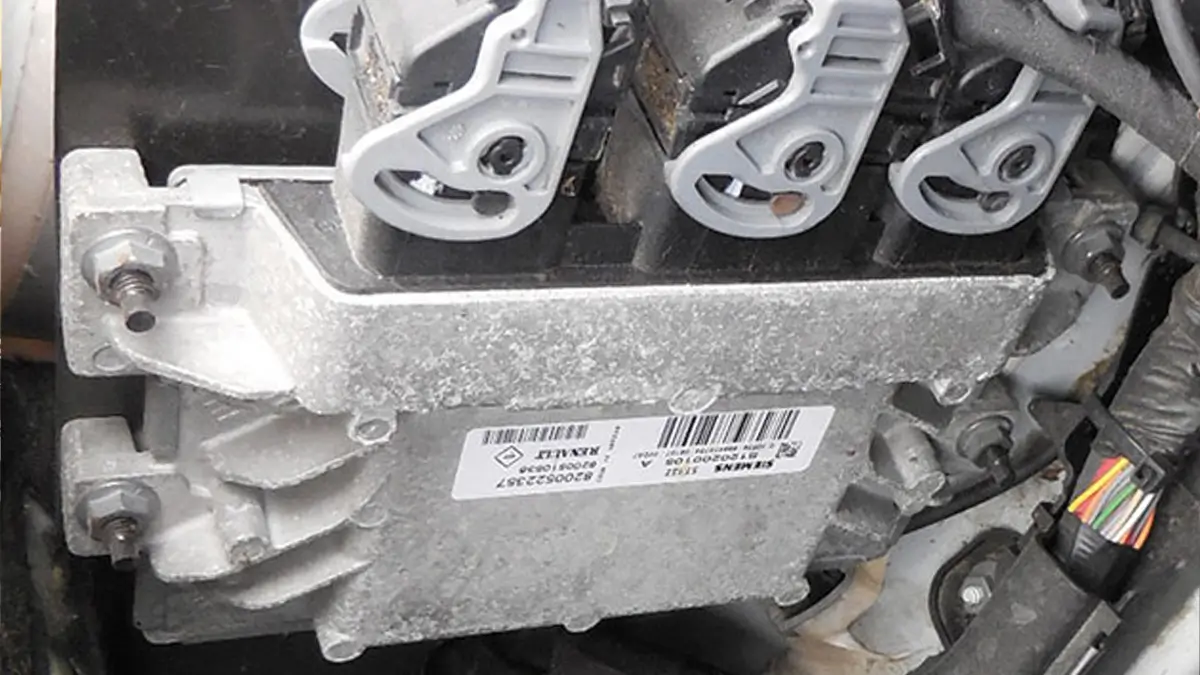
The engine control unit: its function and history
This technology emerged between 1996 and 2000, following the end of carburettor engines.

With the development of new technologies, the automotive ECU has become an essential part of your vehicle. It manages the control and monitoring of engine functions.
The introduction of electronics in vehicles led to the creation of the engine control unit. Manufacturers aimed to implement optimisation techniques to help drivers reduce fuel consumption and comply with pollution standards.
The ECU (Engine Control Unit) is a component located in your car's engine. It is housed in a weatherproof metal casing to withstand environmental conditions. As it mainly consists of electronics, this part must not be exposed to extreme weather. The engine control unit comprises sensors and actuators that provide a comprehensive view of the engine's operation.
Did you know? To locate your engine control unit, look for a large concentration of electrical cables (also known as wiring harnesses). Follow them to find the ECU.

How the automotive ECU works
The engine control unit operates by converting your car's mechanical movements into electronic signals to inform the driver of potential issues. This is why a warning light appears on your dashboard when a component is faulty.
This information is managed through actuators, which are peripheral components of the engine control unit.
The role of the engine control unit is to electronically manage the engine's ignition and injection, as well as the transmission, safety, and comfort of the vehicle.
Here are examples of sensors managed by the engine control unit:
- Accelerator pedal sensor: This sensor allows the engine to adjust the car's speed based on the pedal's position.
- Intake pressure sensor/airflow meter: It enables the engine to determine the atmospheric pressure in the air intake and the amount of air admitted.
- Temperature sensors: These indicate the temperature of various engine components (water, air, exhaust).
- Lambda sensors: They provide the engine control unit with information about the quality of exhaust gases.
- TDC sensor/rotation speed sensor: It informs the engine control unit about the pistons' position, allowing it to measure the engine speed. This sensor controls the car's tachometer.
- Knock sensor: It alerts the engine control unit of uncontrolled combustion in the engine.
- Camshaft sensor: It sends signals to the engine control unit about the engine's combustion cycle (intake, exhaust).
Examples of actuators
- Injectors: These inject fuel into the engine's air intake manifold or, in the case of direct injection, directly into the cylinder.
- Motorised throttle body: This adjusts the amount of air required by the engine based on the power demand.

- Ignition/spark plugs: These ignite the fuel in the combustion chamber. Only petrol engines require them, as diesel vehicles rely on compression-heat auto-ignition.

- EGR valve: This recirculates exhaust gases into the engine to improve the air-fuel mixture.
Steps to take if your car's engine control unit fails
Failure symptoms
Here are some symptoms that may indicate your engine control unit is at risk of failing:
- Multiple warning lights are illuminated on your dashboard
- You notice unstable acceleration in your vehicle
- The engine speed is slow
- You consume more fuel
However, ensure there are no issues with other components before replacing your engine control unit. To be certain, you can visually inspect the sensors. To confirm that your car has no faults, you can use our klavkarr multi-brand diagnostic tool. If your engine control unit is indeed faulty, your car will no longer start.
Repair
Engine control unit failures are very rare. Most of the time, the issue lies with the wiring harnesses connecting the automotive ECU, which may have been damaged by engine vibrations and subsequently severed. In such cases, only the repair of these harnesses is needed.
Replacing the engine ECU
If your engine control unit is truly faulty, it can be replaced. However, this task can be challenging. You need to find a part that is exactly compatible with your car's engine model.
Sometimes, it needs to be programmed to be compatible with the features offered by the vehicle model.

Cost of an engine control unit:
The engine ECU is one of the most expensive parts of a vehicle. It is possible to buy a second-hand unit, but you must ensure its compatibility with your engine. The risk? That the purchased part is of poor quality and fails within a month. It is better to prioritise trusted websites to find what you need.
The price of this automotive part varies depending on the model and generally ranges between 200 and 600 euros for second-hand vehicles.
Learn more
Share this article