
Licence-free cars (VSP) are increasingly present on the roads. Like any modern vehicle, they can encounter engine faults. On certain models, a diagnostic tool allows reading and clearing fault codes recorded by the engine.

Licence-free car diagnostics: reading and clearing engine fault codes
Licence-free cars have become a common mobility solution, particularly for young drivers, people living in rural areas, or those without a category B driving licence.
The engine is controlled by an ECU, capable of monitoring several vehicle parameters. When an anomaly is detected, the ECU records a fault code.
On certain models of licence-free cars, it is possible to read and clear these engine fault codes using a diagnostic tool like klavkarr, provided you check the vehicle's compatibility.
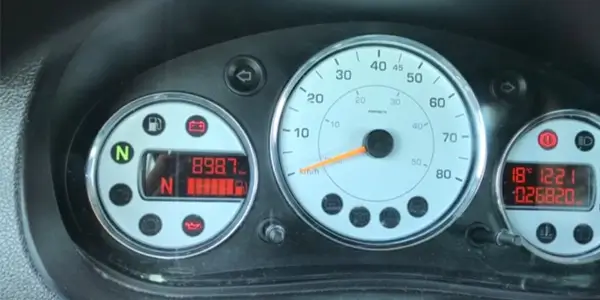
Can you perform diagnostics on a licence-free car?
Unlike standard cars, not all licence-free cars have an accessible diagnostic system. This mainly depends on the model and year.
When the vehicle is compatible, a diagnostic tool allows reading the information recorded in the engine's ECU.
On compatible licence-free cars, diagnostics concern only the engine.
How to read fault codes on a licence-free car?
The procedure is quite simple.
- Check the vehicle's compatibility
- Connect the diagnostic tool
- Read the fault codes
- Clear the engine fault codes
The first step is to check if your licence-free car is compatible with klavkarr.
To do this, visit our website and provide the vehicle's make, model, and year.
Once compatibility is confirmed, locate the vehicle's diagnostic port, connect the klavkarr tool, and then launch the diagnostic application.
The application displays the fault codes recorded by the engine.
Each code corresponds to a type of anomaly detected by the ECU. This helps you understand why a warning light has turned on.
After identifying the problem and performing a repair, it will be possible to clear the engine fault codes.
This operation turns off the engine warning light, checks if the fault reoccurs, and ensures the repair was effective.
What are the benefits of diagnostics on a licence-free car?
Using a diagnostic tool offers several benefits for maintaining a licence-free car.
- Prevent a more significant breakdown
- Understand the problem without immediately visiting a garage
- Save on repairs
- Save on repairs
An engine warning light can be the first sign of a mechanical issue. Diagnostics allow you to act quickly.
By reading the fault codes, you can understand the potential cause of the fault and determine whether the issue is minor or more serious.
In some cases, an engine warning light may be linked to a temporary fault.
Engine diagnostics allow you to check if a repair is truly necessary and avoid unnecessary replacement of certain parts.
Regular diagnostics also help monitor the engine's overall condition and anticipate certain issues. This is particularly useful if you perform the vehicle's maintenance yourself.
FAQ - Licence-free car diagnostics
Can you connect a diagnostic tool to a licence-free car?
Yes, but only on certain models. Some licence-free cars have an engine ECU capable of recording fault codes. With a compatible diagnostic tool, it is possible to read and clear these codes.
Where is the diagnostic port on a licence-free car?
The diagnostic port is generally located under the dashboard or near the engine ECU. Its location may vary depending on the vehicle's make and model.
Are all licence-free cars compatible with diagnostics?
No. Compatibility depends on the model, year, and engine. It is recommended to check the vehicle's compatibility before using a diagnostic tool.
Learn more
Share this article