
First introduced in the early 1900s, ethanol was not initially a very popular fuel due to its corrosive nature. However, since 2017, the trend has shifted. Bioethanol has evolved and is now seen as the main alternative to traditional petrol. To switch fuel, you will need to reprogram your engine.
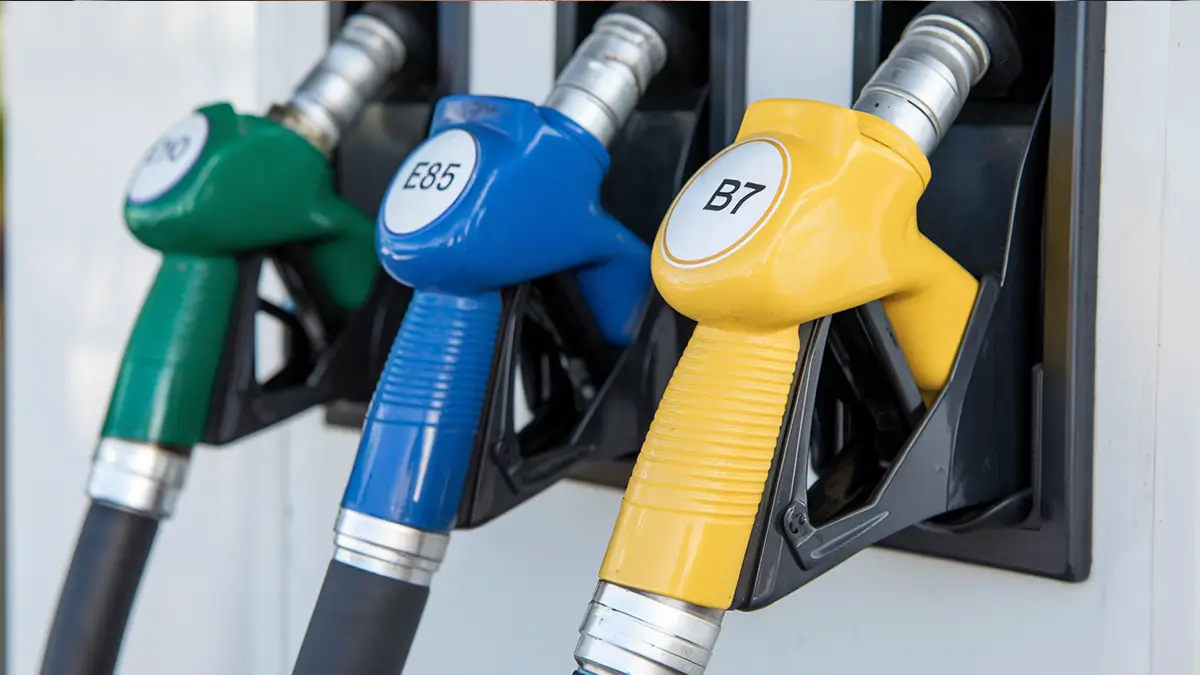
Indeed, ethanol or bioethanol, produced from plants (such as wheat, corn, or sugar beet), is a fuel that is blended with petrol.
As a blend, several formulas are possible depending on the maximum percentage of ethanol and petrol:
- E10 = 10% ethanol
- E85 = 85% ethanol
- E96 = 96% ethanol
Reasons for converting to ethanol

Reprogramming your engine to ethanol can have several objectives: economic, ecological, or even to extend the life of your engine.
The multiple benefits of ethanol reprogramming
Whatever the goal, numerous advantages are linked to converting an engine to ethanol.
A lower E85 pump price, and the best part? No need for an additional tank.
Several factors make ethanol an economical fuel.
First of all, bioethanol is the cheapest fuel in France, averaging €0.70 per litre. It varies between €0.50 and €1.00 depending on the station. It is therefore twice as cheap as its competitors!
However, the lower calorific energy content of E85 implies a slight overconsumption (20 to 30% on average). Nevertheless, it remains more torque-efficient as its octane rating is 105.

E85: a more environmentally friendly fuel
Today, ethanol is considered the only renewable fuel for petrol engines. It has a carbon-neutral balance since the carbon dioxide released during combustion offsets that absorbed by the plants from which it originates.
Ethanol emits 50% less CO2 and 90% fewer fine particles than SP95 petrol (unleaded 95), while emitting more water vapour, meaning the car tends to smoke more in winter.
Moreover, as this fuel is the most eco-friendly on the market, and to encourage ecological transition, vehicles adapted to ethanol are less taxed. Additionally, some regions offer financial aid for conversion.
Bioethanol extends your engine's lifespan
Switching to bioethanol is also believed to extend engine life, although no study has proven this.
Indeed, ethanol has a lower combustion temperature than traditional petrol, resulting in almost no soot in the engine, and the exhaust system does not clog as quickly. However, cars with a DPF may encounter regeneration issues as the required temperature might not be reached.
The engine, therefore, stays cleaner for longer, offering superior longevity.
Ethanol conversion: some drawbacks to consider
This operation seems very appealing, but it is not without risks for your engine.
E85 fuel is sensitive to temperatures
The combustion temperature, 150° lower than its competitors, does not only bring advantages.
Indeed, ethanol does not ignite below 13°C, so an engine running on E85 will not start if the temperatures are too low.
This fuel is therefore not usable at certain times of the year depending on your local climate.

An alternative to this problem, when external conditions are not too extreme, is to adjust the ethanol ratio in the fuel. However, cars with a DPF may encounter regeneration issues as the required temperature might not be reached.
The goal is to maintain a sufficiently high combustion temperature to start the engine while continuing to consume ethanol, thus paying less and polluting less. For cars converted to ethanol, the ethanol injection at start-up can exceed 50% compared to petrol.
Not all vehicles are compatible with bioethanol
Although all petrol vehicles since 2000 are generally compatible with E85, there are always exceptions. Since 2000, cars must comply with the Euro3 standard, which requires the presence of a lambda sensor, thus adapting vehicles to a small ethanol rate like E10.
For a car that is not compatible with ethanol, this fuel can lead to accelerated engine and part degradation. The mixture being too lean could increase the temperature at the valves, causing engine failure.
E85 is not available everywhere
Despite the growing popularity of this fuel, the distribution of ethanol pumps remains very uneven across the territory, with only 23% of service stations currently offering E85.
This unequal distribution can be a barrier for a significant portion of the population living in these "white zones".
A meticulous and costly engine reprogramming
Many ethanol conversion kits (or E85 kits) allowing the reprogramming of your engine to ethanol are available today. However, these kits are often of poor quality and could damage engine parts.
We recommend, before purchasing an E85 kit, ensuring it has been approved and can be used safely.
Additionally, converting your car to ethanol is an expensive operation. Prices range between €990 and €1390 depending on the type of car. It is estimated that at €0.70 per litre of ethanol, the operation becomes profitable after approximately 20,000 kilometres, despite the inevitable overconsumption.
This reprogramming is therefore quite costly.
However, for non-taxable households, the operation can be fully covered thanks to the conversion bonus, which can reach up to €2000.

A change to the vehicle registration document is mandatory
Converting your car to ethanol constitutes a significant transformation of the vehicle's characteristics
The vehicle registration document must therefore be modified automatically.
A change in warranty
Although ethanol conversion is generally accepted by manufacturers, this is not the case 100% of the time.
The ethanol conversion process
There are two ways to reprogram your engine for ethanol.
Using an E85 kit
E85 kits are generic and do not take into account the specificities of your car. As a result, they generally make your car consume more than normal.
These ethanol kits are only installed by certain authorised garages. They are installed after the engine control unit (ECU) and modify the air/fuel mixture of the injectors to support E85.
The installation is now widespread but also very expensive, as only a few garages are authorised for the installation and programming of these kits.
However, it is essential to pay attention to the quality of the kit you purchase! Many non-approved kits are available. A quality E85 kit will include a sensor on the fuel supply circuit to optimise injection and an ethanol sensor on the fuel circuit.
Through engine reprogramming
Reprogramming your engine allows you to modify the parameters of the engine control unit. By changing these parameters, it is possible to adjust the number and duration of injections, thereby enabling the engine to support ethanol. It also adjusts the ignition timing since the type of explosion differs from petrol.
Engine reprogramming is more commonly known for increasing a car's power by adjusting parameters such as turbo pressure. For ethanol conversion, the principle is the same.
Ethanol reprogramming has the same advantage: it is unique. Reprogramming will convert your car to E85 by directly modifying the ECU mapping.
Similarly, most specialists can remove the mapping in a few minutes if you wish to revert to the original settings.

The importance of diagnostic tools
Whether using an E85 kit or deciding to reprogram your engine, in both cases, it is crucial to ensure the engine operates correctly at every stage of the process.
A diagnostic tool helps detect potential faults that could arise during the conversion and harm the engine's health.
In conclusion
Converting your engine is an operation that offers many advantages but is not without risks. It is therefore necessary to ensure that your car can also run on petrol, allowing you to refuel with petrol to avoid running out if ethanol is unavailable.
In conclusion, bioethanol offers real benefits, the main one being its attractive price in a context of rising fuel prices. It is then up to each individual to consider their consumption habits and the legitimacy of making a change to their car.
Other articles you may find interesting
Share this article